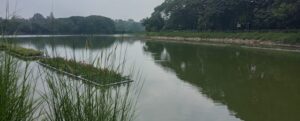
Yesterday I visited the Science Gallery, Bangalore to check out the exhibition ‘Waterscapes of Bangalore’. A joint effort by Vishvesvaraya Industrial & Technological Museum and Panni Earth Foundation, it showcased the status of rivers of Bangalore.
And you guessed it right, it was not a pretty picture. The exhibit titled ,’ If River had rights’ cut me straight. If river had rights, then the number of people put behind bars would be one person per second. And this happens to be my fondest wish!
Coming to the exhibition, my chief reaction was of dismay.
From river to mori(drain)
I know rivers have not got a better deal in our country. The status of Ganga,Yamuna and our own Vrishbhavati river that flows like a gutter is proof of that.
But what bothered me was this. A river when it is born somewhere in the quiet forests or green valleys is simple, pure,clean and bubbling with joy. Some of these river origins boast of temples too. We worship water as a goddess.
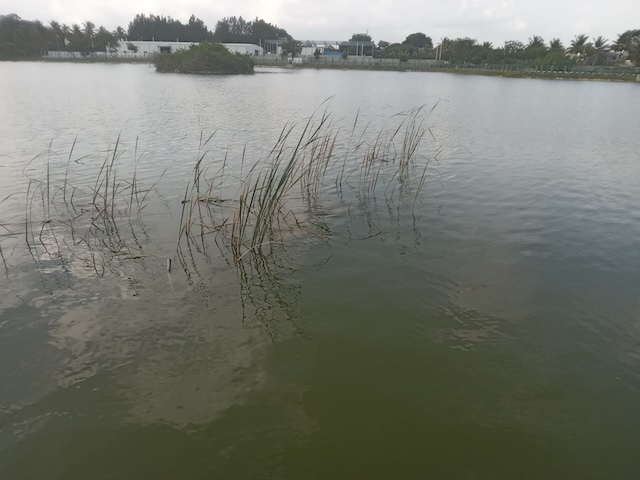
But when she flows further down into the plains and cities expecting the same purity and welcome, no sir she doesn’t get it. In fact she only gets scorn, and worse indifference. Bathing, washing clothes letting the city waste into her -both industrial and household-she is getting a new avatar that of a smelly drain.
The story of Vrishbhavati is like this. Not sure of the river origin if it is Bull temple, or the Nanditheertha at Malleshwaram , where the water at least looks pristine when it comes out of Bull’s mouth. But see it at Mysore Road, you will no longer recognise it. The same status quo exists for the Arkavathy from the Nandi Hills and the Dakshina Pinakini that flows to TamilNadu after flowing some 83 kms in Karnataka.
The rivers have changed state from pure to impure, clean to dirty, sacred to disgust. And who is responsible for this?
The exhibition powerfully displays the story of some of these rivers through their varied informative exhibits- historical maps, images and various experiential tools with help of technology.
A second powerful message that the exhibition drove home was this. Bangalore is dependent on Cauvery i.e some 100 plus kilometres away. This was not news for me. And also knew that this necessity or rather luxury came with a cost- the BWSSB spends nearly 3 crores every single day just for pumping this water into our taps.
But now there were plans to tap water from Sharavathi- 450 kms away, and Yettinahole-200 kms away. Located in Western Ghats, such a project is a disaster waiting to happen not to mention the exorbitant costs, resources and time required for this.
Why is that we are looking for solutions so far away from home?
Self Sustaining solutions in Bangalore
The city receives sufficient rainfall 900-1000 mm per year and through sustainable practices we can hold on to this water. Rainwater harvesting, recharging ground water, treating wastewater and rebuilding/repairing our water channels, rajakaluves, Keres and lakes, not to mention capping our borewell use are some of the approaches we can take. We have replenished our lakes as communities in the city like Jakkur or Puttenhalli.
Bangalore will be beautiful. We get to eat and drink cleaner vegetables and water. And nature around us will thank us.
The Arkavathy and its tributaries flow into Cauvery Wildlife Sanctuary. The animals -Asian elephants, squirrels,crocodiles, otters, the Masher and the aqua will thrive in cleaner water.
Volunteering choices open
It is our duty to right the wrong that we have done to our rivers. if you feel the same here are some ways that you can help.
Save Bangalore Lakes (SBL) — a more grassroots / citizen-driven group (mailing list / volunteer network) for people concerned about lake conservation in their locality. You can join by contacting them via their mailing group or online community platforms
Guardians of Lakes Environmental Trust (GOLET) — a Bangalore-based NGO focused on rejuvenating lakes and waterbodies, particularly in and around communities. They welcome volunteers and support from individuals and corporates alike.
Clean Bangalore– Volunteer with them here. They work on environmental problems such as lakes encroachment, waste disposal, water pollution, air and noise pollution, loss of green cover, sewerage and sanitation, hazardous and e-waste disposal, etc in the city.
Kere Mitra – Part of BBMP initiative, this volunteer drive happens every year. You can register to be part of Keremitra and BBMP will allocate an id if you are selected. You can look into lake activities and raise complaints in the Keremitra group to alert authorities. Though this initiative has not been very successful, yet it is a one step to create awareness.
Bangalore organisations working towards saving lakes
Various Bangalore based organisations are also working for saving lakes. MOD Foundation works on water-bodies, drains / lakes / infrastructure, and tries to bring systemic urban-ecology thinking back to Bengaluru’s water-ecosystem. Mod Foundation’s “K100 Citizens’ Waterway” is a project to revive Bengaluru’s stormwater-drain network (which connects old lakes and waterbodies), rerouting sewage, restoring water flow, creating walkways and public-space around waterways etc.
WELL Labs works on water, environment, land and livelihoods — aiming to transform water-systems at scale across India, in both rural and urban contexts.
They have an “Urban Water” programme focused on creating water-secure, nature-based, sustainable solutions for cities — which includes work relevant to lakes, wastewater reuse, urban water balance, and flood/ water-stress mitigation in cities like Bengaluru.
Biome is a Bengaluru-based non-profit working on ecological water management, sanitation, groundwater recharge, rainwater harvesting, urban & peri-urban water-systems, and sustainable water infrastructure.They run a notable campaign called Million Wells for Bengaluru — aimed at augmenting groundwater by reviving/recharging shallow aquifers and supporting livelihoods of traditional well-diggers.
United Way Bengaluru is a local chapter of a global movement (United Way Worldwide) — working in India since about 2008. On water / environment / urban-water front, their major initiative is the campaign Wake the Lake — focused on rejuvenating, restoring and conserving lakes and urban water-bodies in Bengaluru.
One Billion Drops is their project – a groundwater-/rainwater-conservation campaign run by United Way Bengaluru (UWBe). Its goal: build many percolation / recharge wells (percolation pits) across Bengaluru so as to capture rainwater, recharge aquifers, reduce surface runoff, and restore groundwater levels.
You can check their website, become a volunteer and participate in all of their campaigns.
Leave a Reply