As children, many of us collected stamps. Visiting the MAP museum and seeing the textile labels—known as chaap—made me realize how vibrant and imaginative these 19th-century labels were. They would have been a sheer delight to collect as well.
What is ticket chaap?

What can you make out from the picture above?It shows the picture of Ottoman sultan. The picture is nicely bordered and has the name of a city Calcutta, name of a market and lane and also the name of a company- EZRA & CO. Can you guess what this image stands for?
It is a textile label put on the front piece of folded cloth. The names indicated the market it was intended to and the name of the manufacturer or the proprietor. These labels rectangular with a border are more than a 100 years old- from 19th or the 20th century time period. They were also known as tickets, chaaps or simply tikets.
The labels originated from Manchester- known as the Cottonopolis of the world. Manchester was popular for its numerous warehouses where cotton bales were stored, processed and traded cotton. And with the labels/brand design and printing it also became the hub for ticket design and print.
The use of chromolithography

The labels were printed both in British and India. So the labels most often reflected the period, local preferences and even was worded in regional languages, representing the customer base. In this image for instance it showcases Alexander riding an elephant. Text used is Gujarati script. And used colours suitable for Indian palette.
The labels were done using chromolithography. This is a type of lithography done plate by plate that was prepared for each color and then layered up to get the exact image. In other words, the designs were hand painted, then transferred piece by piece or layer by layer on paper using blending, shading and gradient techniques.Colour palette depended on the markets. Indian markets sometimes used more than 13 to 14 colours.
Textile tickets depiction of changing times:


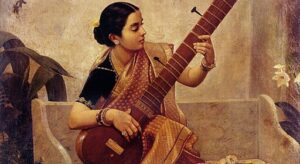
The images were popular with the Indian market. And also reflected the times. The picture on right showcases an Indian women in a traditional saree playing a sitar. Though it is a Ravi Verma’s painting textile labels borrowed such themes to depict conventions. So gods, goddesses, religious themes were common in labels. Showcasing of such labels, also instilled trust in the product and layer loyalty. Also signified that the product was pure. Thus labels often acted as powerful tool for branding and advertisement too.
The picture on the left shows ‘Bharat Mata’ by Abindranath Tagore. Label also showcased such themes showcasing the changing time. During the 20th century intense nationalist feelings were on the rise. Thus the labels too depicted the various freedom movements going on at that time.
Diverse themes of textile ticket labels

This picture is interesting. It shows Vishnu ,Lakshmi sitting on an elephant and Shiva in his Nandi. Lakshmi is seen giving alms to ascetic Shiva. Thus the labels reflected Indian heritage and borrowed heavily from mythology and religious themes to advertises the products.
Some pictures at MAP museum were unique. One label depicted a scene from the Kanchana Chitra Ramayana. What is strange is that this manuscript was not accessible to all. It was commissioned by the ruler of Banaras. So how did it come in to the hands of textile print makers?
Similarly labels also showcased paintings from different regions like the Deccan. It also copied portraits and photographs of noble family. Such depictions too instilled brand loyalty. Historical figures, leaders, mythological scenes were common.
However labels were not just about religious themes or patriotic values. They also showcased hopes, dreams. Portraits of sensual women were also popular and were known as lady tickets.
Labels also depicted comical scenes , scenes from daily life, market, factories, vendors, board or leisure games etc. They were designed keeping in mind the market it was going to. Thus they acted as powerful visuals in the product industry.
Note to Educators & Parents
You can easily connect the visit to the museum with class 8, chapter 6: Weavers, Iron Smelters and Factory Owners unit. There is focus on Indian textile traditions (chintz, muslin, etc.), British policies, decline of handloom, and rise of factory production here which can be connected to the MAP exhibition where labels are products of colonial textile trade and industrial production. Can be used to explore themes of colonial branding, marketing, and exploitation.
For Class 10 too it is relevant. Chapter 4, The Age of Industrialization covers proto-industrialization, factory production, and especially Indian textile industry and British trade policies. It discusses “labeling and branding of cloth” — including use of images on labels to appeal to Indian consumers and is a direct match to the MAP exhibit — you could even take excerpts from this chapter to explain the function of textile labels.
Leave a Reply